Jamie’s Ultimate Veg Let’s Go Veggie ! Eat Your Greens !
Read 0
Beyond the familiar image of a young chef with a friendly style—chopping, slicing, tearing, and cooking with swift, confident hands, focusing on easy, casual dishes that are simple to eat—another hallmark of global celebrity Jamie Oliver is his knack for capturing rising trends and transforming them into his own distinctive cooking style. This talent has enabled him to continually create new cooking shows without end, many of which have become beloved favorites among audiences.
Jamie’s Ultimate Veg—or ‘The Ultimate Vegetable Dishes from Around the World’—is one of six‑episode series follows Jamie’s journey from India to Palestine in search of ‘vegetables’ to craft delicious dishes where they are no longer just side characters on the plate, but step into the spotlight as the true stars. The show reflects the habits of a new generation of consumers who are increasingly embracing vegan and vegetarian food—for reasons of health, ethics, and the environment.
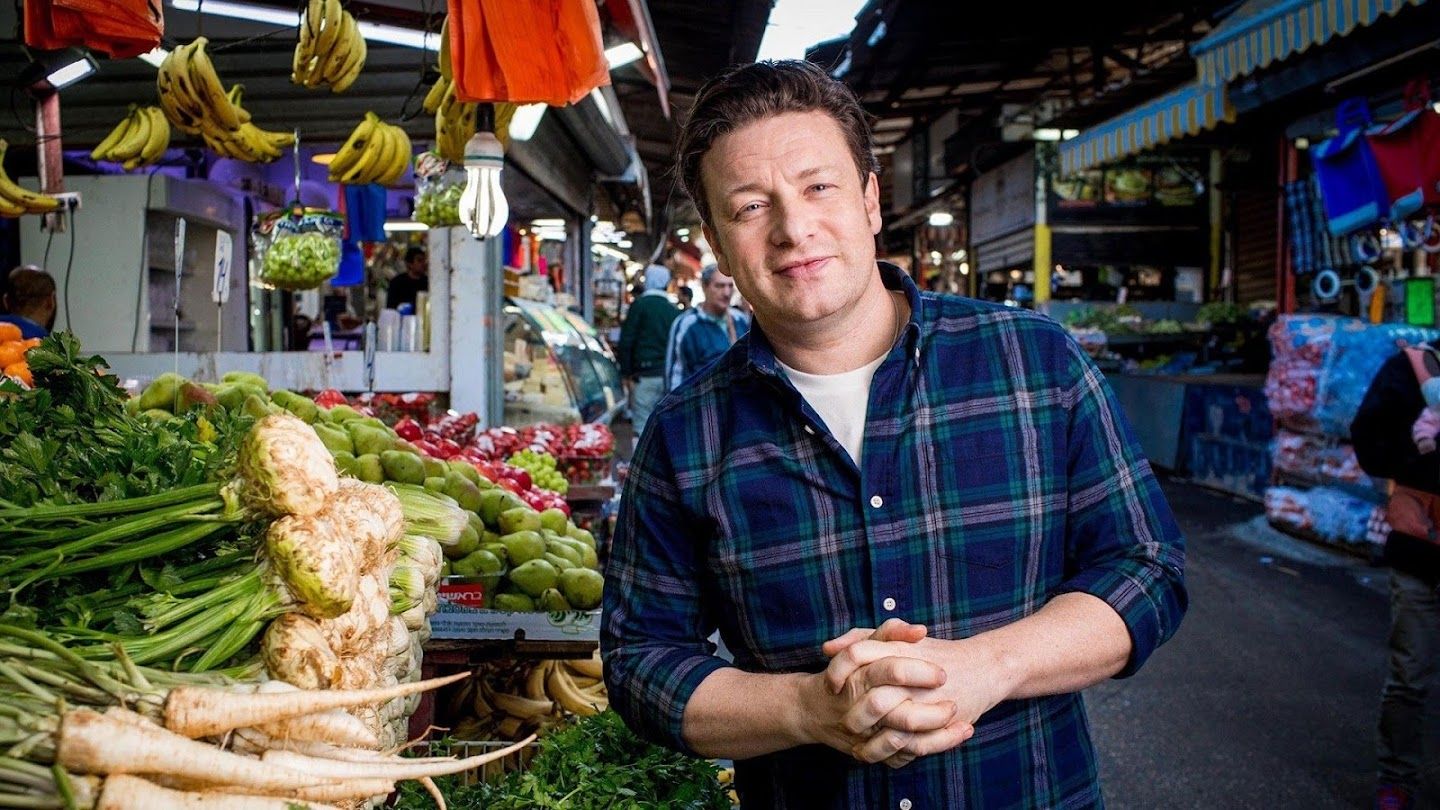

Jamie once said in an interview that he had been thinking about creating this book and series for nearly ten years—back when plant‑based food was still just a side option on restaurant menus. Over time, he became convinced that vegetable‑based or meat‑free dishes were no longer a niche choice, but had entered the mainstream. And now, he felt it was the right moment to show fans that common green and yellow vegetables we often overlook, hold far greater potential and flavor than we ever imagined.
The selling point of this show is to demonstrate that “vegetables can bring joy and satisfaction if we give them the same love and care as fine cuts of meat.” What Jamie does is not about ‘disguising’ vegetables as meat—no grinding beans and seasoning them to mimic pork. Instead, he uses vegetables as vegetables, striving to draw out their flavors to the fullest.
What’s even more interesting is that he also provides cultural perspectives on vegetables and vegetarian food. For example, he explains that the foundation of vegetarian cuisine in India did not begin with health or environmental concerns, but with beliefs and geography. India has a wide variety of herbs, along with techniques of simmering, baking, and the use of spices passed down through generations. Or in Bethlehem, Palestine, we can walk through the market while hearing how each herb has its own origin, role, and meaning in people’s daily lives. All of this proves that meat‑free food has long been embedded in human cultural systems.
Even though it’s a vegetable‑focused series, Jamie admits that he himself is not 100% vegetarian. Everyone in his family still eats meat and fish. But over the past five years, he has steadily increased the number of vegetable‑based meals each week—and discovered that it also saves on food costs, while being easy to cook and quick, without losing any flavor. This realization has strengthened his desire to encourage people around the world to be more open to these kinds of meals.
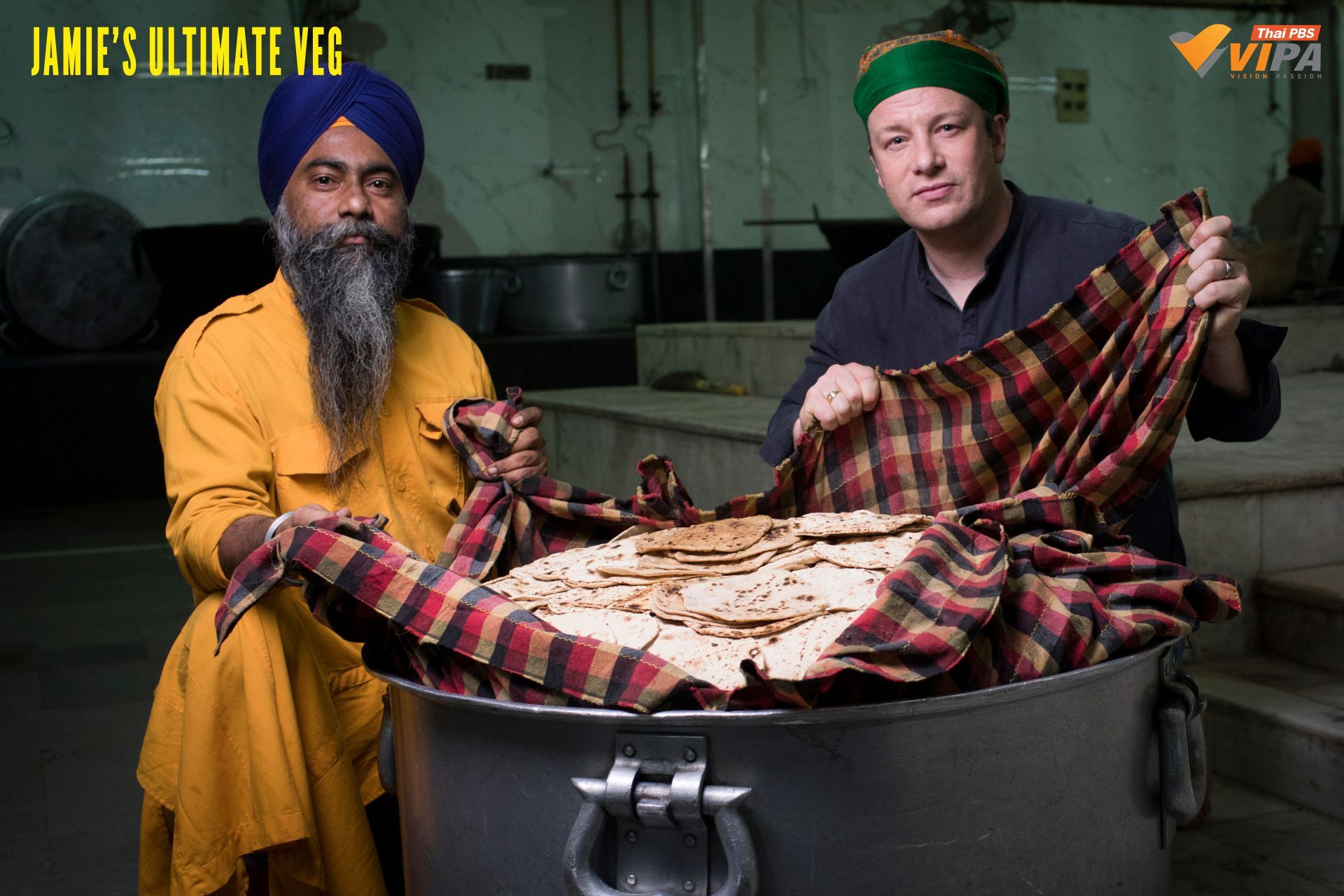
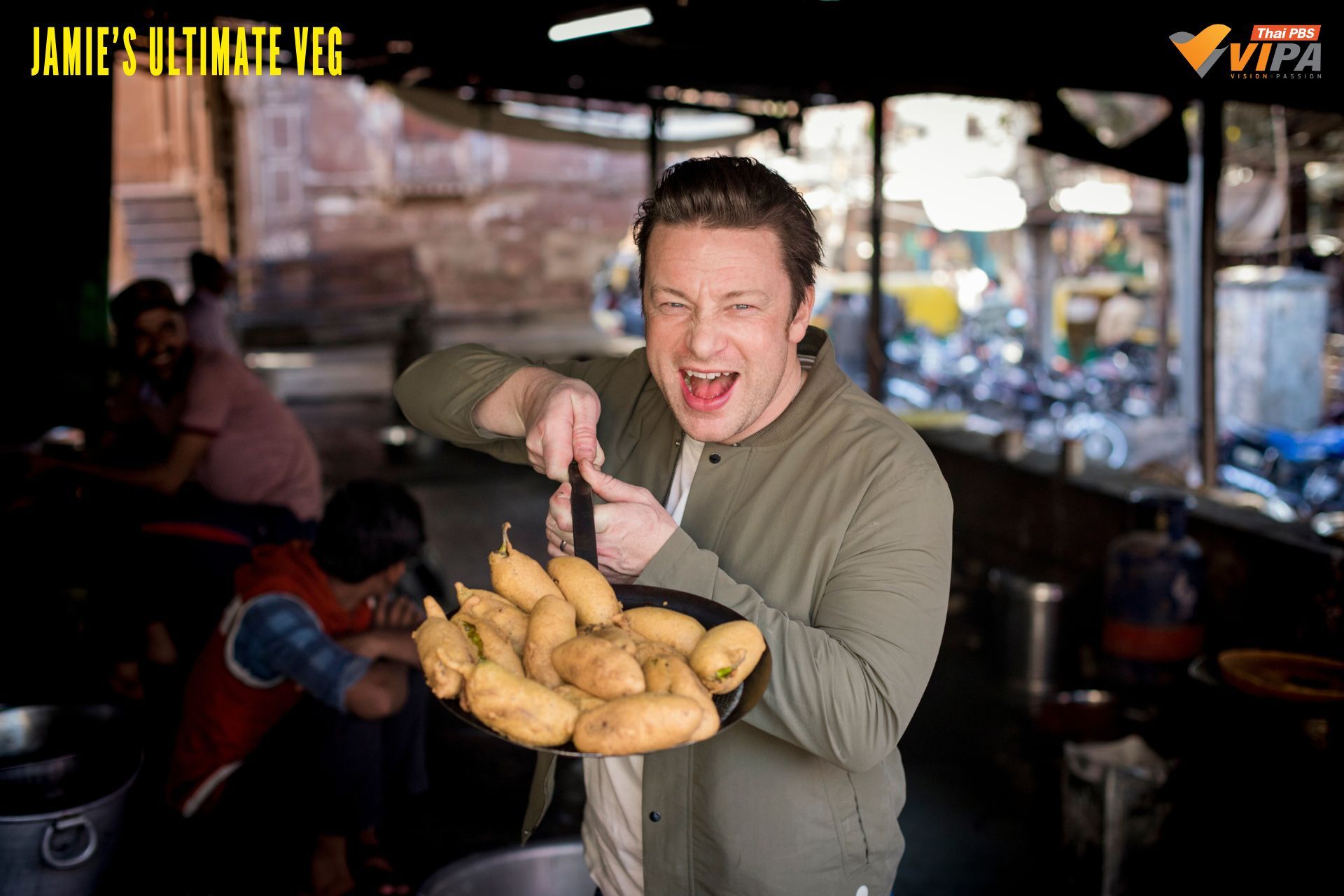
Another point of interest is that, although Jamie declares his aim to create top‑class dishes that meet audience expectations, his recipes are not fancy and do not rely on flashy, complicated techniques. On the contrary, he emphasizes traditional cooking skills—slow braising, baking, smoking, and other basic methods that draw out the natural flavors of ingredients in ways viewers can realistically follow. The concept he explained in an interview is that, “freshness and seasonality are the foundation of ingredients. From there, we build complexity in their flavor with fire and herbs.”
The dishes we see in the show fully reflect this philosophy—whether it’s a vegetarian cottage pie that emphasizes the richness of the sauce and layers of vegetables; an eggplant lasagna that relies on baking techniques and alternating textures; a black bean burger brightened with fresh salsa and fruit for acidity; or vegetable pasta that delivers the ‘depth of flavor’ he always stresses.
“I want everyone to eat as many vegetables as they can—whether that means adding just one more portion a day, or setting aside one meat‑free day each week,” he said in an interview. “The more you cook with vegetables, the more likely you are to feel better and save money. And if you still eat meat, you can either keep that savings or spend it on better‑quality cuts. Either way, it’s a healthier, smarter choice.”
About Author