Can Teachers Transform Thailand? Questions and Hopes for Thai Education Reform
Read 0
Thailand’s education system is in crisis...It’s a sentence we’ve heard time and again and one you’ll hear throughout this documentary series. In this episode, we follow the lives of those on the front lines: the teachers. They face relentless pressure from an outdated system, bear the weight of immense societal expectations, and still struggle to hold onto their own dreams and ideals, even as those dreams teeter on the edge of collapse.
From students who still cannot read or write, to the chronic shortage of teachers in small and remote schools—especially subject specialists like English teachers—the challenges are staggering. Learning outcomes have plummeted to historic lows (as reflected in Thai students’ PISA scores across reading, mathematics, and science). At the policy level, the problems are no less severe: a lack of vision, and erratic shifts in direction driven by political agendas. Just hearing this is enough to confirm how deep the crisis runs in Thai education. However, the bad news is that this is only a glimpse of the grim reality we’re about to uncover.
The documentary introduces us to “Teacher Emma,” or Kru Kaewsai—Kotchakorn Bualamlam, from Ban Nampe School in Nong Khai Province—a representative of Thailand’s new generation of educators. Though she entered the profession reluctantly, pressured by family expectations, she has embraced her role with determination and grit. Yet working in a small rural school comes with burdens far heavier than expected, severely impacting her mental health. Excessive paperwork demanded to meet project evaluation criteria consumes time beyond classroom hours. Off-site training frequently pulls teachers away from the classroom. Some tasks are beyond their roles, like sourcing ingredients for student lunches. These results of the broken policies fall squarely on the shoulders of teachers. And the ones who suffer—physically and emotionally—are the teachers.
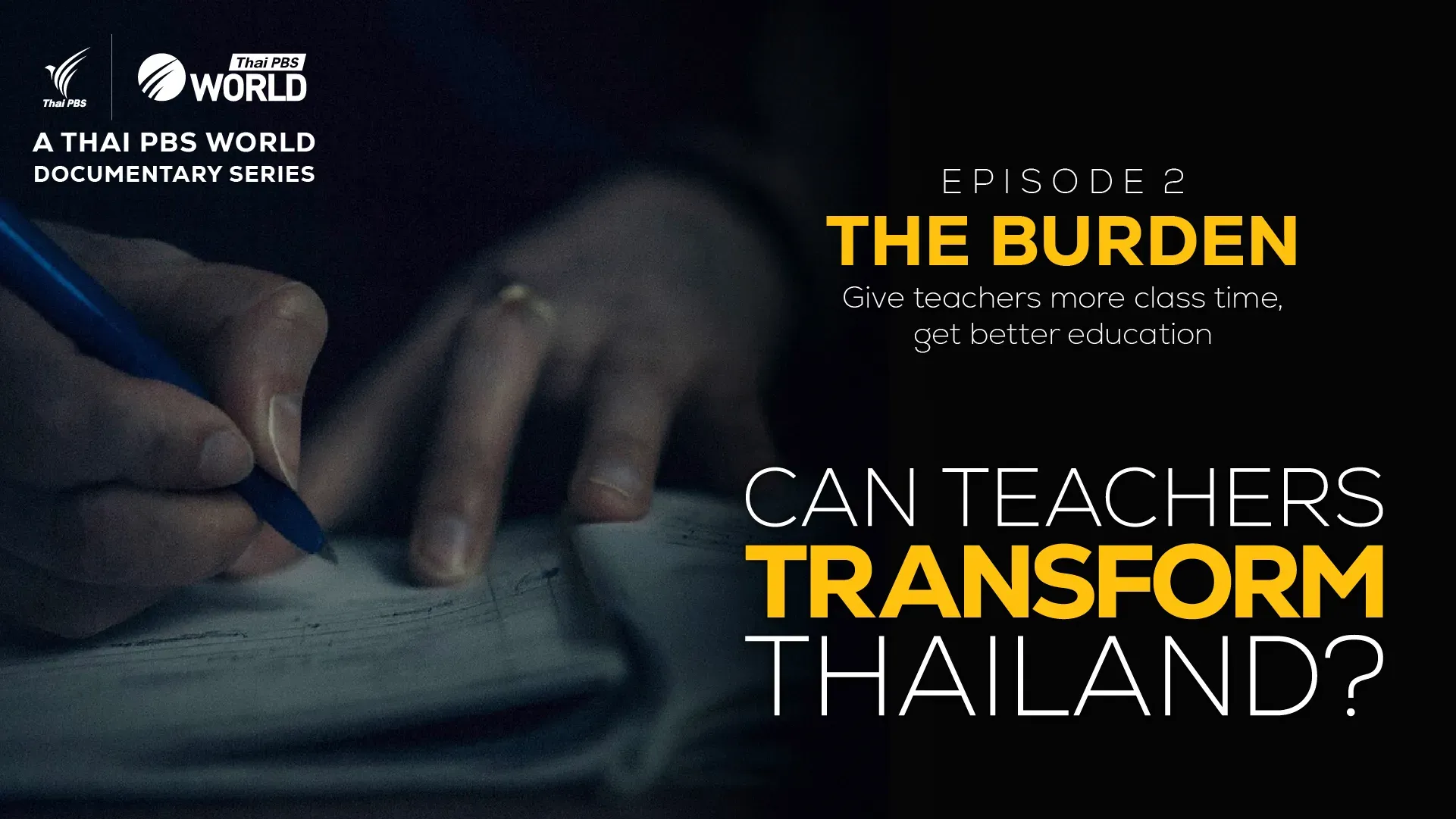 ภาพจากสารคดี Can Teachers Transform Thailand?
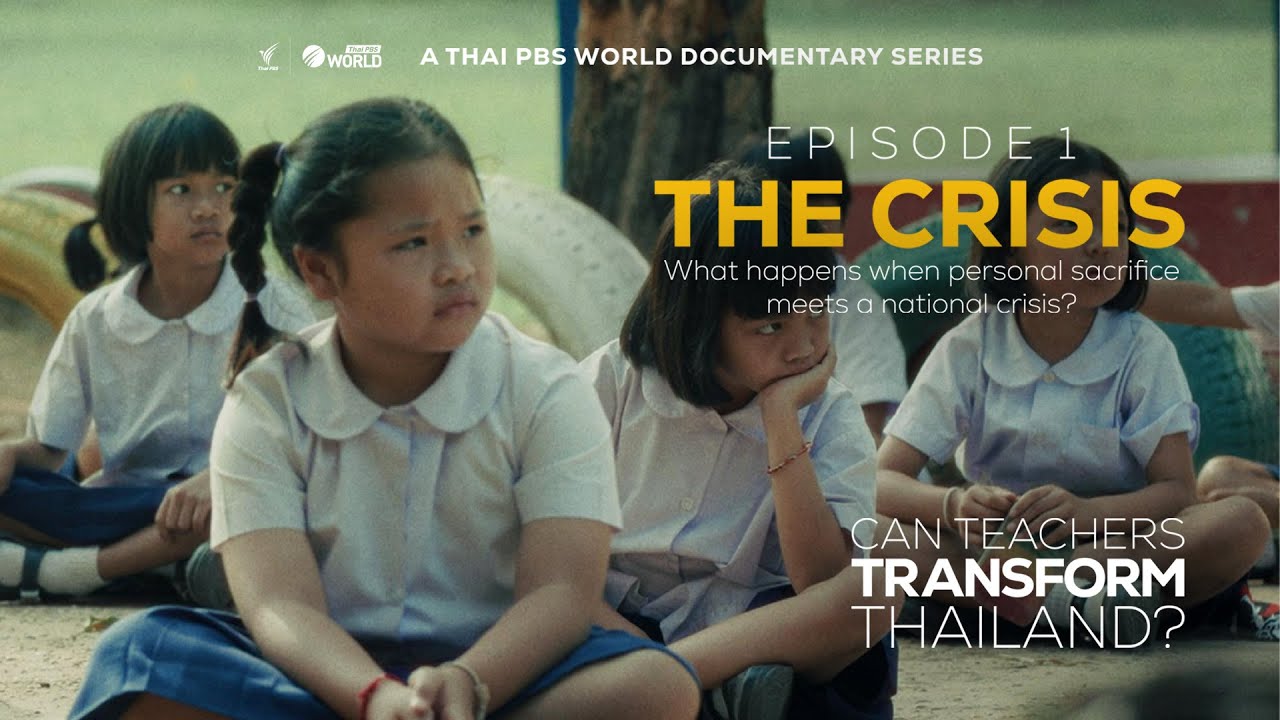 ภาพจากสารคดี Can Teachers Transform Thailand?
The series also recounts the real-life case of a teacher in Buriram Province who took her own life—believed to be the result of accumulated stress from overwhelming workloads. Her sister spoke through tears: “Let this be the last case.” That short sentence reveals that the challenges faced by many Thai teachers have reached a life-and-death threshold.
At the same time, we’re introduced to “Teacher Owen,” a graduate in economics from Chulalongkorn University and the University of Amsterdam. He believes that education is the foundation of economic development, and he works to transform math lessons, which are often seen as dull, into tools that train children to think analytically, build logical understanding, and connect classroom learning to everyday life. His approach not only makes learning more enjoyable for students but also helps them see that mathematics isn’t something distant or irrelevant, it’s part of their world.
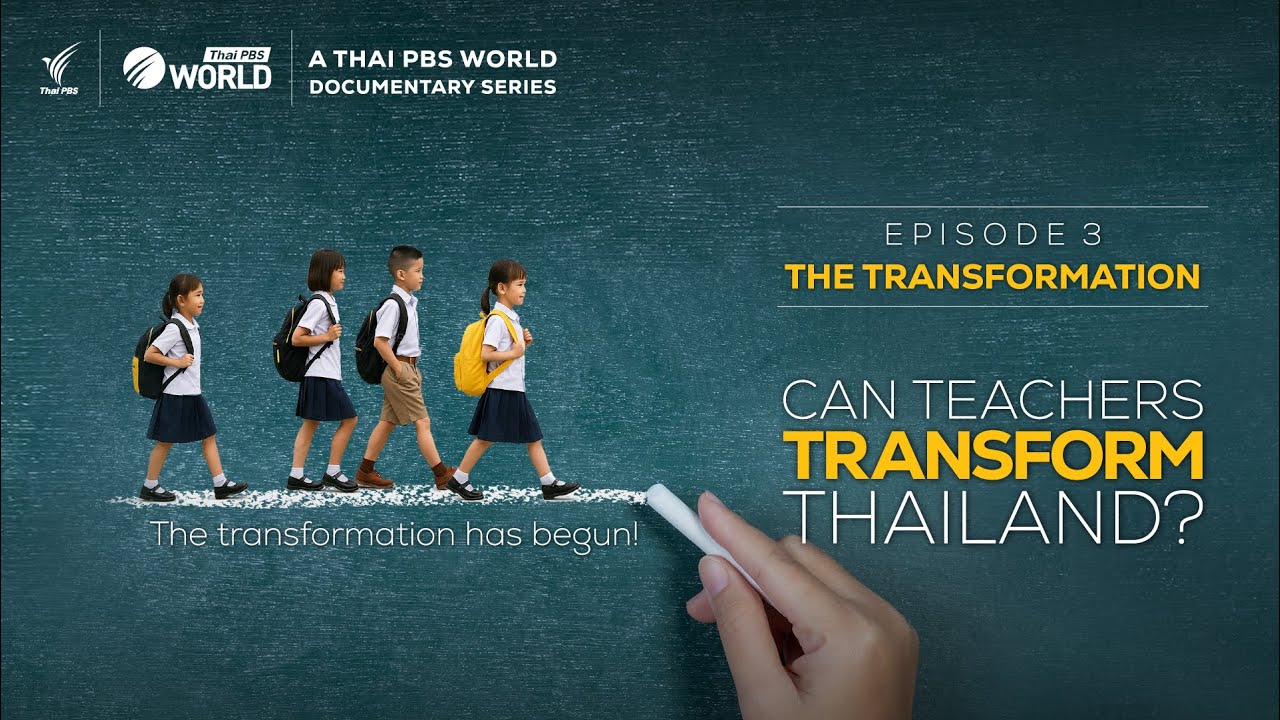 ภาพจากสารคดี Can Teachers Transform Thailand?
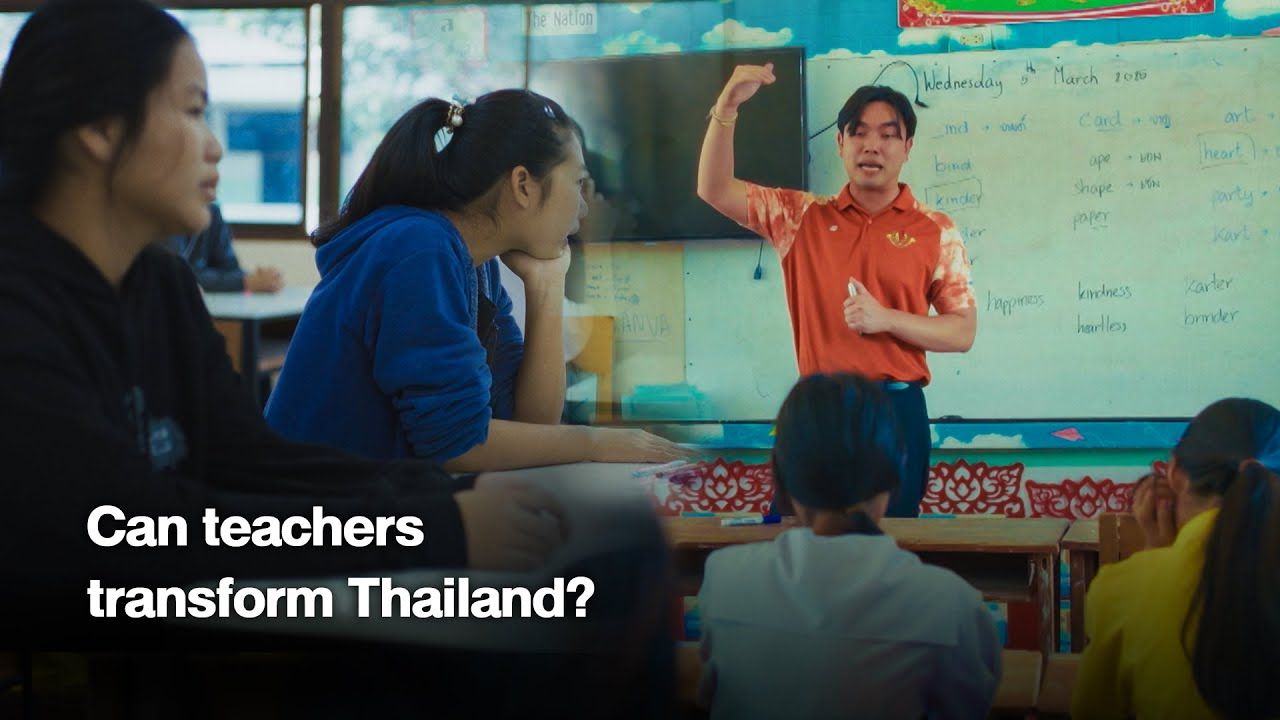 ภาพจากสารคดี Can Teachers Transform Thailand?
Another case featured in the documentary is Huai So Witthayakhom Ratchamangkhalaphisek School, which has pioneered an educational innovation known as the “System 2 Classroom.” This learning system is designed to align with each student’s context, especially those facing life challenges and at risk of dropping out—such as children who must work to support their families, or those whose personal struggles have led to gaming addiction. The system acts as a safety net, gently supporting these students so they can continue on their educational path.
The stories of Teacher Owen and the “System 2 Classroom” show that even when the larger structure is broken, change can still begin at the smallest unit: the teacher. Similarly, in the final part of the documentary, we witness a quiet transformation in Teacher Emma. She rediscovers her long-held dream of becoming a filmmaker or storyteller—a dream that hadn’t disappeared. She begins to channel that creative energy into her role as a teacher. Finally, she comes to understand that while national policies may be difficult to fix, as a human being, she must hold on to hope and create change with her own hands.
However, we cannot deny that teachers and schools should not be forced to shoulder these overwhelming burdens alone. Quality education should not depend solely on “teachers with inner fire,” but on structures that sustain and protect fire to give the light. So while the answer to the question “Can Teachers Transform Thailand?” may already be woven throughout these stories, this documentary does not ask us to romanticize the teaching profession. Because the real question is not “Can teachers change Thailand?” It is: “How much longer will Thailand allow this collapsing system to continue?”—before the last flickers of hope carried by these devoted teachers are extinguished.
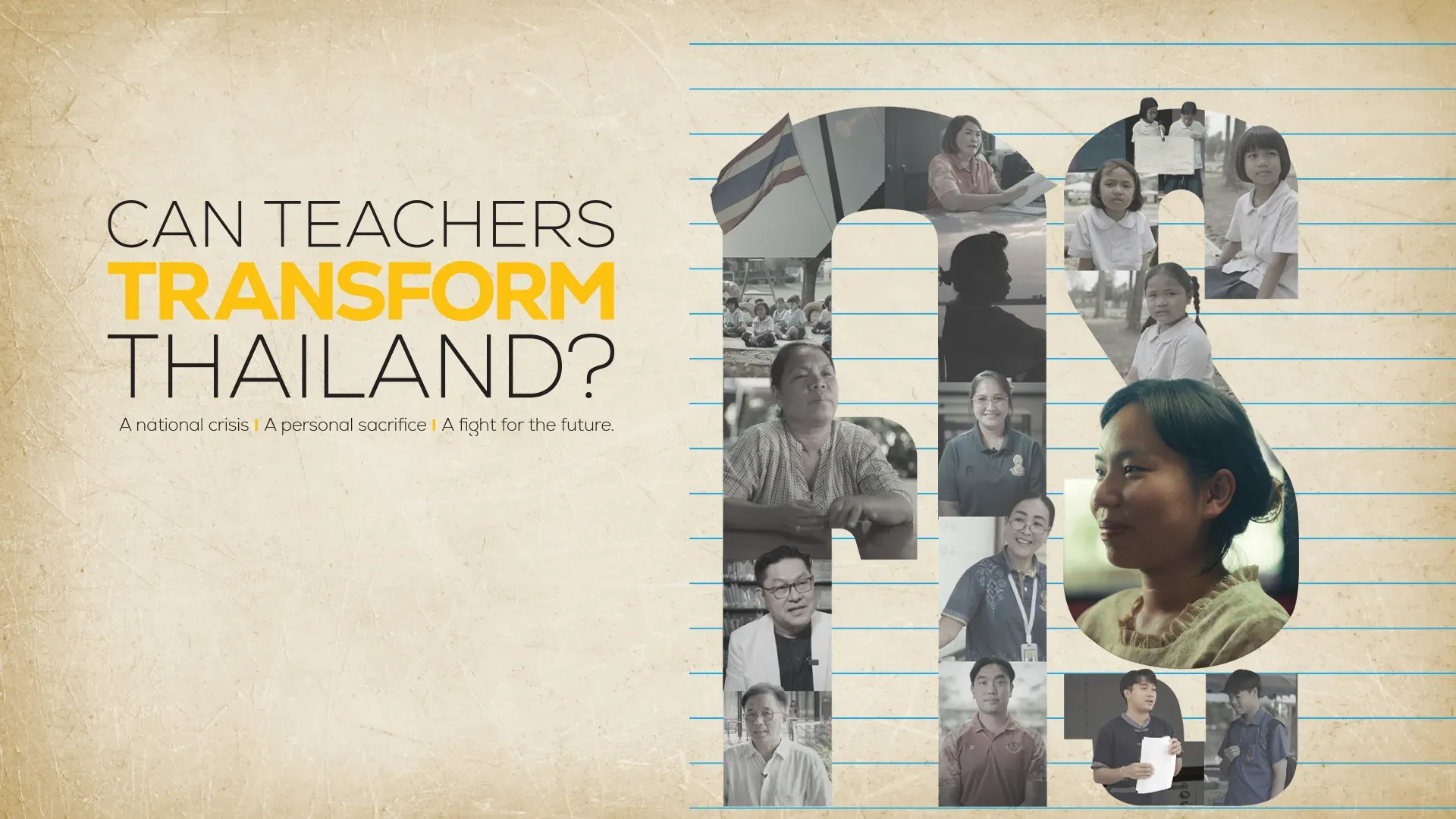 ภาพจากสารคดี Can Teachers Transform Thailand?
About Author